
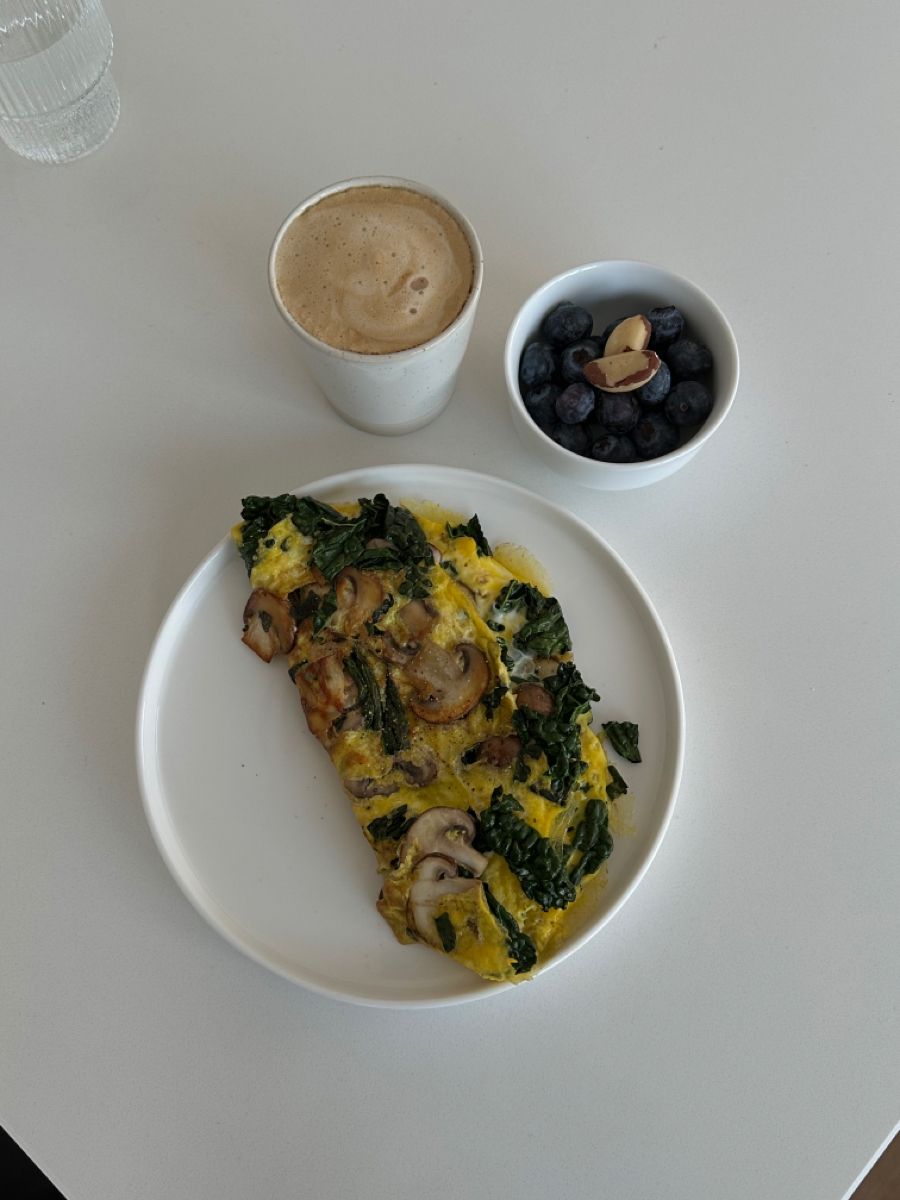
Peptides are having a moment.
They’re in serums.
Moisturisers.
Supplements.
Little expensive bottles promising to make your skin look approximately seven years younger by Thursday.
And listen, I’m interested.
But there’s another part of the peptide conversation that isn’t quite as sexy:
food.
Because peptides are essentially short chains of amino acids, and amino acids come from the protein we eat.
Now, before we get carried away, eating a salmon fillet isn’t the same thing as applying a specifically formulated peptide serum to your face. Your digestive system breaks dietary proteins down into amino acids and small peptides, which your body then uses wherever they’re needed.
You can’t eat an egg and instruct your body:
“Cheeks, please.”
Unfortunately.
But if we’re talking about supporting healthy skin, hair, muscle and normal collagen production, getting enough quality protein and the nutrients involved in those processes matters.
So, in the spirit of eating our skincare, here are four foods I’m keeping in rotation.
1. Eggs
I will defend eggs forever.
They’re easy.
They’re affordable.
They take five minutes.
And somehow adding an egg to something immediately makes it feel like you prepared an actual meal.
Eggs are a source of complete protein, meaning they contain all nine essential amino acids our bodies can’t make themselves.
Those amino acids are used throughout the body to build proteins — including structural proteins found in skin, hair and muscle.
They’re also particularly rich in amino acids such as proline and glycine, which are components of collagen.
This doesn’t mean scrambled eggs are secretly Botox.
Please don’t tell TikTok I said that.
It means they’re a genuinely useful source of the raw materials your body needs to build and maintain tissue.
My version:
Eggs on sourdough.
Avocado.
Tomatoes.
Salt.
Olive oil.
An iced matcha somewhere nearby.
She’s got her life together for at least the duration of breakfast.
2. Salmon
If there were a Cool Girl Wellness Food Hall of Fame, salmon would have a permanent exhibit.
First, it’s an excellent source of complete protein.
But salmon also gives us omega-3 fatty acids, which are involved in normal inflammatory processes and help support the skin barrier.
It also provides nutrients including selenium and vitamin D.
So while we’re here for the protein, we’re getting a pretty good supporting cast too.
And this is why I prefer thinking about foods rather than obsessing over one isolated nutrient.
Your body isn’t using one ingredient at a time.
It’s running thousands of processes simultaneously.
Give it a good grocery shop.
My favourite easy dinner:
Salmon.
Crispy potatoes.
Something green.
Olive oil.
Lemon.
That’s my kind of skincare routine.
3. Greek Yoghurt
Greek yoghurt is one of my favourite ways to sneak more protein into a day without feeling like I’m permanently meal prepping chicken.
It’s rich in high-quality dairy protein and contains all the essential amino acids.
Depending on the variety, it can also provide calcium, vitamin B12 and beneficial live cultures.
And it requires absolutely no cooking.
Huge.
Add berries for vitamin C and polyphenols.
Chia seeds for fibre and healthy fats.
Walnuts.
A little honey.
Suddenly you’ve created a breakfast that looks suspiciously Pinterest-worthy despite requiring approximately three minutes of effort.
This is what I want from wellness.
4. Bone Broth
Okay, this one gets a lot of wellness-girl PR.
Bone broth naturally contains collagen-derived proteins and amino acids including glycine and proline.
When collagen is cooked for a long time, it breaks down into gelatin and smaller protein fragments.
But let’s manage expectations.
Drinking bone broth doesn’t send collagen directly into your forehead.
Your digestive system still gets involved.
And the amount of protein and collagen can vary considerably between products and homemade versions.
So I wouldn’t treat bone broth as some magical anti-ageing potion.
I would treat it as another useful food.
Drink it warm.
Use it as the base for soup.
Cook rice or grains in it.
Add it to stews.
Very cosy.
Very wellness.
No need to pretend it’s going to make you immortal.
But Here’s What Actually Matters
I think wellness content sometimes makes us obsess over individual nutrients so much that we forget how the body actually works.
Collagen production, for example, doesn’t only require amino acids.
Your body also needs nutrients such as vitamin C to make collagen properly.
So the goal isn’t:
Eat as much protein as humanly possible.
It’s:
Eat a varied diet that gives your body the raw materials it needs.
Protein.
Fruit.
Vegetables.
Healthy fats.
Carbohydrates.
Fibre.
Micronutrients.
Water.
The whole boring, effective package.
Which is why pairing these foods with things like berries, citrus, kiwi, papaya, peppers and leafy greens makes a lot of sense.
Protein provides amino acids.
Vitamin C supports normal collagen synthesis.
Colourful plants bring antioxidants and other useful compounds to the party.
Suddenly “eat your peptides” looks less like a supplement protocol and more like… eating a decent lunch.
Eat Your Peptides. Keep Your Serum.
I’m still using skincare.
Obviously.
This isn’t a campaign to overthrow Sephora lol.
But I like thinking about beauty from both directions.
What am I putting on my skin?
And what am I giving my body to work with underneath it?
So use the peptide serum.
Wear your SPF.
Eat the eggs.
Have the salmon.
Throw some berries on the Greek yoghurt.
Make the bone broth if you’re feeling particularly Goop on a Sunday.
Because your skincare routine doesn’t have to stop at your bathroom cabinet.
Sometimes it’s what’s for dinner.


Leave a Reply