
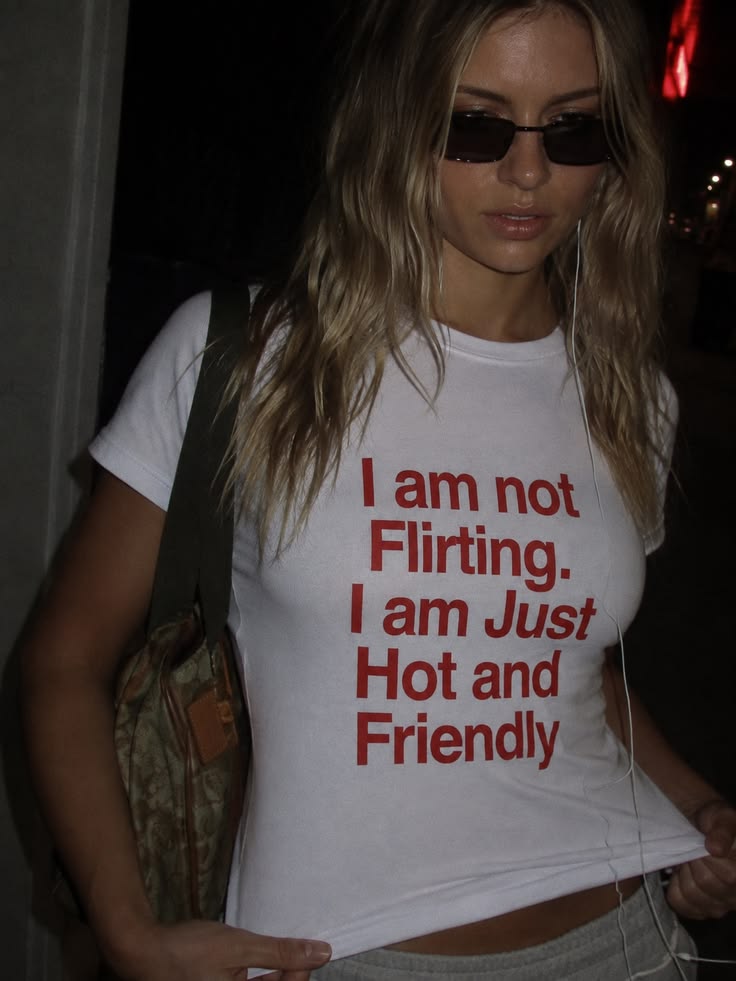
(My Honest Take)
I’ve taken enough personality quizzes in my lifetime to know that apparently I need a category for everything.
Love language?
Know it.
Attachment style?
Unfortunately know it.
Personality type?
Obviously.
But recently I discovered something called an Erotic Blueprint, which is essentially a personality framework for how you experience desire and intimacy.
And obviously I needed to investigate.
Because we have plenty of language for describing relationships, but when it comes to sex, our vocabulary gets weirdly limited.
You’re either “vanilla.”
“Kinky.”
“High libido.”
“Low libido.”
And… that’s about it?
But what if what turns you on isn’t simply about how much you want sex?
What if it’s also about how you like desire to build?
I actually think it’s pretty interesting.
Because maybe the point isn’t discovering exactly what type you are.
Maybe it’s getting better at understanding what you like.
The Energetic: You Want the Tension
For the Energetic type, anticipation is a huge part of attraction.
The flirting.
The build-up.
The almost-but-not-quite.
The tension where you’re both very aware of what’s happening but nobody has made the obvious move yet.
Basically, the anticipation is part of the experience.
According to the framework, Energetic types may enjoy space, teasing and longing and can sometimes feel overwhelmed if intimacy moves too quickly.
And honestly, I can see how simply knowing that about yourself could be useful.
Because perhaps you’ve spent years thinking:
Why do I love the build-up so much?
Nothing wrong with you.
Maybe rushing straight to the main event simply isn’t what creates desire for you.
The Sensual: The Vibe Matters
Lighting.
Music.
Smell.
Touch.
Feeling comfortable.
Clean sheets.
The room not looking like someone detonated a laundry basket in it.
For the Sensual type, the senses are a major part of becoming turned on.
Which sounds obvious until you realise how differently people experience this.
One person could be perfectly capable of getting in the mood while there’s a pile of washing on the floor.
Another is staring at it thinking:
Absolutely not.
Sensual types may need to feel physically and mentally settled enough to drop into their bodies.
The potential downside? Getting so distracted by the environment, or your own thoughts, that you struggle to actually be present.
Sometimes the candles are helping.
Sometimes you need to stop worrying whether the candles are helping.
The Sexual: Can We Just Have Sex?
This is probably closest to what culture traditionally portrays as sexual desire.
Nudity.
Physical attraction.
Sex itself.
Orgasms.
Straightforward sexual cues.
The Sexual type tends to find the traditionally “sexual” parts of sex exciting without necessarily needing a huge amount of context around them.
And I actually think this distinction could explain a lot between couples.
Imagine one partner is Sexual and the other is Sensual.
One is thinking:
“We’re attracted to each other. Let’s go.”
The other is thinking:
“You haven’t spoken to me properly all evening, the overhead light is on and there are socks on the bed.”
Neither person is necessarily wrong.
They might simply have very different routes into desire.
And suddenly what looked like mismatched libido could sometimes be a mismatch in how desire gets activated.
That’s interesting.
The Kinky: Your Brain Likes Something Different
You’re interested in experiences that feel outside conventional sexual expectations.
That could involve novelty, fantasy, role-play, power dynamics or simply something that feels psychologically exciting because it’s different.
The important part of this type, to me, isn’t creating a checklist of what counts as kinky.
It’s the permission to be curious about what turns you on without immediately judging yourself for it.
Adults can have fantasies.
Adults can be curious.
Adults can like things their friends don’t.
As long as what’s happening between people is consensual, communicated and safe, sexual preferences don’t need to pass some imaginary normality test.
The interesting question becomes:
What actually excites me when I’m not worrying about what I’m supposed to like?
That’s a much better question.
The Shapeshifter: Honestly? All of the Above
Then we have the Shapeshifter.
The person reading every previous section thinking:
Yes.
Also yes.
Unfortunately yes.
Shapeshifters, according to the framework I read about, can enjoy elements from all of the other types.
Variety itself can be part of the appeal.
Which sounds excellent, but can become overly focused on adapting to their partner and neglect what they want.
And that part stood out to me.
Because being adaptable is lovely.
Being so adaptable that you’ve forgotten your own preferences?
Less lovely.
Your ability to meet someone else’s needs shouldn’t require disappearing from your own sex life.
I Don’t Think You Need to Pick a Box
This is where my take differs slightly from the whole personality-test culture.
I don’t think we need another label to become weirdly attached to.
“Sorry, I can’t possibly enjoy that. I’m a Sensual.”
Please.
Human sexuality is complicated.
What you want can change depending on your partner, your mood, your hormones, your stress levels, your confidence, your life stage and even just… Tuesday.
You might recognise yourself strongly in one type.
You might be a mixture.
You might change.
That’s fine.
I think these frameworks are most useful when they give us language, not rules.
The Actually Useful Part? Talking About It
This might be the biggest takeaway.
Most of us expect our partners to somehow know what we want without us having to say it.
Which is a fascinating strategy.
You wouldn’t walk into a restaurant, refuse to order and then become furious when the waiter doesn’t psychically deliver your favourite meal.
Yet in relationships we sometimes expect:
They should just know.
Maybe they don’t.
And maybe you don’t fully know either.
So rather than obsessing over which Blueprint you are, you could use the categories to start a much more useful conversation.
What helps you get in the mood?
What takes you out of it?
Do you like anticipation or spontaneity?
How important is the environment?
Do you want novelty or familiarity?
What makes you feel connected?
Is there something you’ve been curious about?
Those questions probably tell you considerably more than simply announcing that you’re Type Three.
My Honest Take
Do I think everyone needs to take an online quiz and reorganise their sex life according to the results?
No.
Do I think there’s something valuable about becoming more curious about your own sexuality?
Absolutely.
Because we’re surprisingly comfortable talking about what we need everywhere else.
We know our coffee order down to the milk.
We know which workouts we enjoy.
We know our skincare type.
We know exactly how firm we want the mattress.
But when someone asks what makes us feel desired, connected or turned on?
Suddenly we’re buffering.
Maybe your “sex personality” isn’t another identity you need to figure out.
Maybe it’s simply an invitation to pay attention.
To what excites you.
What makes you feel safe.
What shuts you down.
What makes you curious.
What you want more of.
And then, revolutionary concept incoming, actually tell the person you’re sleeping with.
Turns out communication might still be the hottest personality type.


Leave a Reply